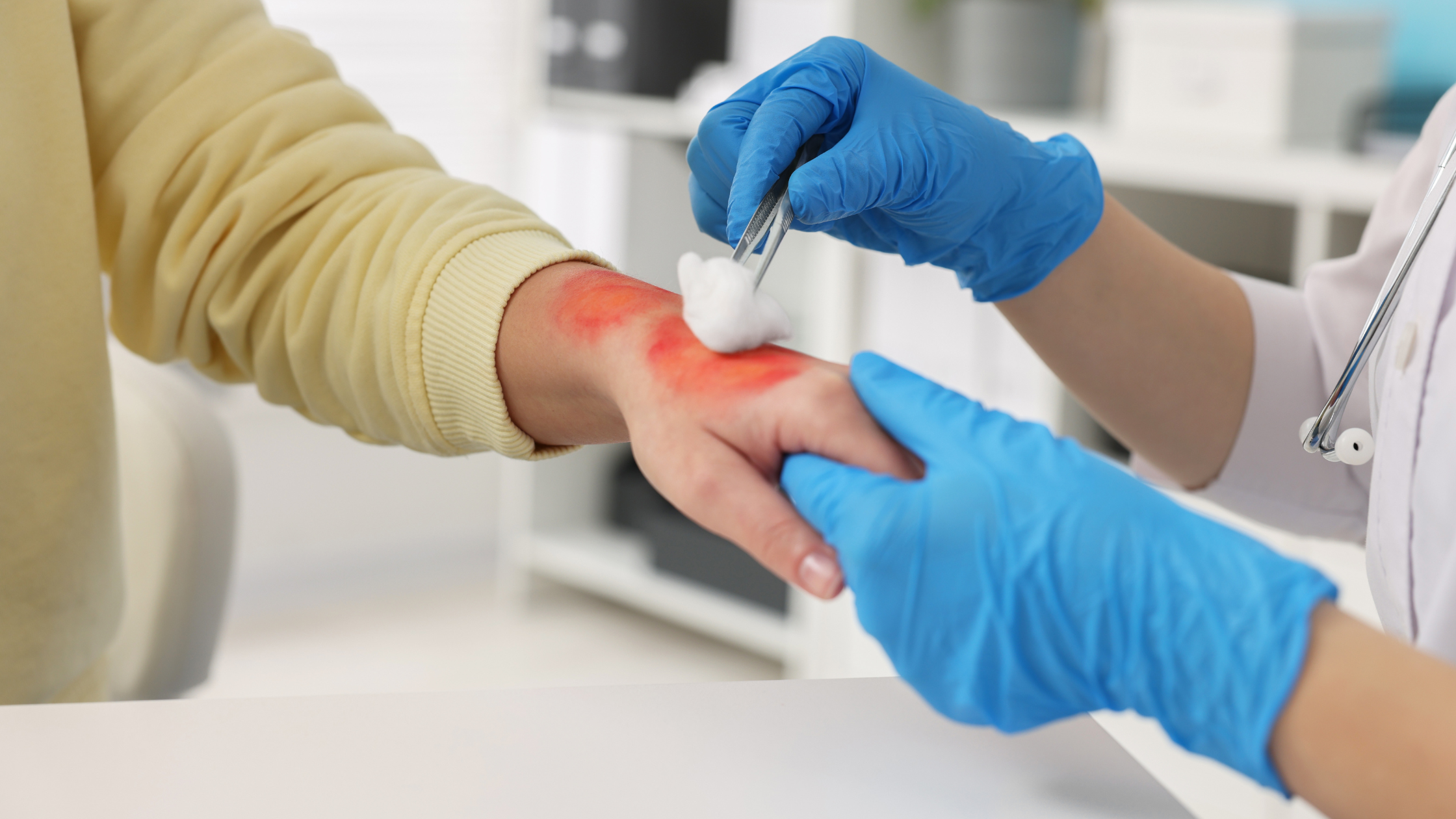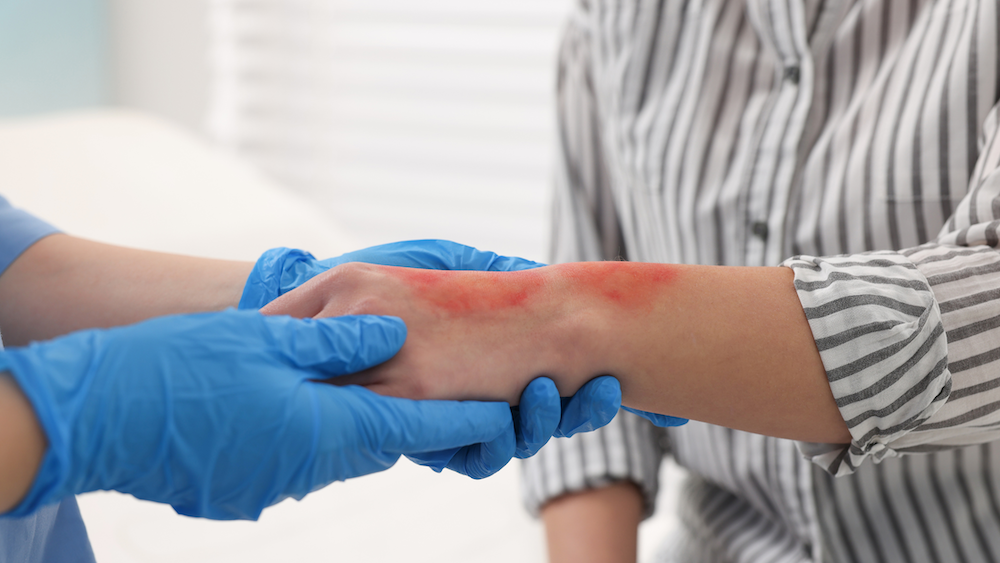
Accurate assessment of Total Body Surface Area (TBSA) is one of the most essential steps in managing acute burn injuries. Clinicians rely on TBSA to determine burn severity, guide fluid resuscitation, support triage decisions, and establish a roadmap for surgical intervention. Yet, even with standardised methods, TBSA estimations can vary greatly between providers—introducing the risk of over- or under-treatment in critically injured patients. With new advances in burn wound imaging and AI-powered diagnostics, there is an opportunity to move beyond traditional estimation and toward a future of precision burn care.
What Is TBSA and Why Does It Matter?
Total Body Surface Area (TBSA) refers to the percentage of a patient’s body surface affected by a burn injury. In clinical practice, this value is crucial for categorising the extent and severity of burns, particularly partial-thickness and full-thickness burn injuries. TBSA does not include superficial burns, as these generally do not contribute to fluid resuscitation calculations or surgical planning.
The accurate estimation of TBSA burn percentage impacts several critical aspects of burn care:
- Burn severity classification: Helps determine whether a patient requires referral to a specialised burn center.
- Fluid resuscitation: Guides calculation of fluid needs using formulas such as the Parkland formula.
- Triage decisions: Supports prioritisation of care in mass casualty burn events.
- Surgical planning: Assists in determining the size and number of excision and grafting procedures.
Inaccurate estimation can result in significant clinical consequences—ranging from hypovolemia due to under-resuscitation to fluid overload and compartment syndrome from over-resuscitation.
How Total Body Surface Area Is Measured in Practice
TBSA estimation can be performed using several standardised methods, each with specific use cases and levels of precision.
Wallace Rule of Nines
The Wallace Rule of Nines is a rapid estimation tool used primarily in adult patients. It divides the body into segments that are assigned percentages in multiples of nine:
- Head and neck: 9%
- Each arm: 9%
- Each leg: 18%
- Anterior torso: 18%
- Posterior torso: 18%
- Perineum: 1%
This method is ideal for pre-hospital settings and during initial triage, as it allows for quick calculation of TBSA burned. However, its accuracy decreases significantly in pediatric patients, whose body proportions differ from adults.
Lund and Browder Chart
The Lund-Browder chart provides a more precise and age-adjusted method of TBSA calculation. It divides the body surface into smaller segments and adjusts the area percentage based on the patient’s age, making it the gold standard in pediatric burn assessment. It is widely used in emergency departments and burn centers where accuracy is paramount.
Palmar Method
In small or patchy burn injuries, the Palmar method offers a quick estimation by using the patient’s palm (including fingers), which roughly equals 1% of the total body surface area. This technique is particularly useful for isolated burns or minor burn injuries.
Who Performs TBSA Burn Measurements?
Multiple healthcare professionals are responsible for estimating TBSA at various stages of care:
- Paramedics and EMTs use the Rule of Nines during field triage.
- Emergency physicians and burn nurses apply more detailed assessments in the ER.
- Burn surgeons finalise TBSA evaluations during operative planning and ongoing care.
Despite widespread use, these methods rely on visual estimation and are subject to considerable inter-provider variability.
Limitations of Traditional TBSA Estimation
While widely accepted, traditional TBSA estimation tools present several limitations:
Subjectivity and Variability
TBSA estimation remains a subjective process, dependent on clinician experience and visualisation skills. Different providers may report significantly different TBSA values for the same patient. This variability can impact critical decisions, such as fluid resuscitation volume and transport needs.
Risk of Over- or Under-Treatment
An overestimated TBSA can lead to excessive fluid administration, raising the risk of edema, pulmonary complications, and compartment syndrome. Underestimating TBSA, conversely, may result in hypovolemia and poor tissue perfusion, further damaging viable tissue and delaying healing.
Challenges in Mixed-Depth Burns
Visually estimating burn depth adds another layer of complexity, particularly in mixed-depth or evolving injuries. Superficial partial-thickness and deep partial-thickness burns can appear similar in the early hours post-injury, compounding the difficulty of accurate TBSA measurement.
Looking to Reduce Guesswork in Burn Wound Evaluation?
Learn how the DeepView AI® System provides objective, non-invasive imaging that supports fast, accurate decisions in burn triage.
More about Deepview
Learn more about our DeepView® technology
Request a Demo
Looking to learn more about DeepView® technology, or eager to see it in action?
Where AI Imaging Can Support Better Burn Evaluation
Although the DeepView AI® System does not currently measure TBSA directly, it significantly enhances wound-level assessment and contributes to better-informed decisions.
Non-Invasive Burn Imaging at the Point of Care
The DeepView AI® System is a non-contact imaging device that uses multispectral imaging technology to capture real-time data on burn depth, tissue viability, and healing potential. It operates at the bedside and provides immediate visual output, empowering clinicians with actionable insight during early evaluations.
Burn Depth Evaluation
The DeepView AI® System wound imaging system distinguishes between superficial, partial-thickness, and full-thickness burns, reducing reliance on subjective visual assessment. This allows clinicians to more accurately assess which areas may require surgical excision versus conservative management.
Wound Healing Prediction
By leveraging AI algorithms trained on a vast dataset of labeled burn images, the system predicts the likelihood of spontaneous healing within 21 days. This supports surgical decision-making and helps minimise unnecessary procedures.
Real-Time Image Capture
The device captures consistent and standardised images of the burn wound, which can be archived, shared remotely, and used for documentation, quality assurance, and research.
Learn more about the DeepView AI® System wound imaging system and its applications in frontline wound care solutions.
The Future of Burn Diagnostics: Combining TBSA with Imaging AI
As diagnostic tools advance, there is growing interest in integrating TBSA estimation with imaging-based AI platforms. While current tools like the DeepView AI® System focus on wound-level depth and healing insights, the future holds potential for full-body burn mapping using imaging and artificial intelligence.
Toward Automated TBSA Estimation
Integrating multispectral imaging with AI and 3D modeling could enable automated surface area determination, offering a reliable and objective alternative to manual TBSA assessments. This could significantly reduce clinical variability and improve triage accuracy in both civilian and military settings.
Integration with EHR and Decision Support Tools
Incorporating imaging outputs into Electronic Health Records (EHRs) allows for longitudinal tracking, documentation, and integration into burn injury protocols. As AI models evolve, they may also support fluid resuscitation calculators, graft planning tools, and predictive modeling based on cumulative burn area and depth.
The DeepView AI® System pivotal burn study demonstrated the clinical value of wound-level AI diagnostics, setting the stage for broader applications in future burns methods.
Key Takeaways
- Accurate TBSA estimation is foundational to effective burn management, influencing resuscitation, triage, and surgical planning.
- Traditional methods—such as the Rule of Nines, Lund and Browder chart, and Palmar method—are widely used but suffer from subjectivity and variability.
- Advanced imaging tools like the DeepView AI® System provide real-time, objective data on burn depth and healing potential, offering critical support for wound-level assessment.
- While not currently used for TBSA calculation, AI imaging systems are poised to play a future role in comprehensive burn diagnostics, including potential surface area measurement.
Join the Burn Centers Advancing with AI
Discover how the DeepView AI® System is helping clinicians improve wound insight and streamline care planning.
Learn More About the DeepView AI® System
More about Deepview
Learn more about our DeepView® technology
Request a Demo
Looking to learn more about DeepView® technology, or eager to see it in action?
FAQs
1. What is the TBSA of a burn?
TBSA (Total Body Surface Area) of a burn refers to the percentage of the body surface affected by partial- or full-thickness burns. It is used to classify severity and guide treatment.
2. Why is it important to calculate TBSA?
TBSA estimation is crucial for determining fluid resuscitation needs, prioritising triage, and planning surgeries or transfers to burn centers.
3. How to calculate body surface area formula?
Formulas like the DuBois or Mosteller formula are used to calculate body surface area (BSA) in square meters, primarily for drug dosing—not for burn TBSA, which relies on burn-specific methods like the Rule of Nines or Lund-Browder chart.
4. What is the TBSA burn Parkland formula?
The Parkland formula calculates initial fluid resuscitation:
4 mL x TBSA (%) x body weight (kg)
Half is given in the first 8 hours post-injury, the remaining half over the next 16 hours.
By combining traditional methods with modern AI technologies, burn teams can achieve greater precision in both TBSA burn evaluation and wound management, reducing uncertainty and improving outcomes across the continuum of burn care.
Related Posts