Introduction — The Diagnostic Gap in Burn Care
- Burn injuries affect millions globally. Roughly 11 million people require medical care for burns each year, and about 180,000 die, mostly in low- and middle-income countries (MDPI, 2024).
- In the U.S. alone, approximately 398,000 burn-related injuries occur annually, with 29,000 hospital admissions (American Burn Association, 2023).
- Yet despite this burden, burn care lacks standardised diagnostic tools.
- Clinicians still depend largely on visual inspection—a process with 60–75% accuracy, even among experienced surgeons (The International Journal of Lower Extremity Wounds, 2020).
Key message: Burn care remains one of the few major wound care areas without a reliable, objective diagnostic device.
Why Accurate Burn Diagnosis Matters
- Determining burn depth guides critical treatment choices—whether to excise, graft, or allow natural healing.
- Misdiagnosis leads to overtreatment (unnecessary surgeries) or undertreatment (infection, scarring, delayed healing).
- Studies show that clinical assessment accuracy drops to as low as 50%–71% between days 2–5 post-injury (MDPI, 2023).
- These diagnostic inconsistencies translate to longer hospital stays, higher costs, and suboptimal outcomes (ScienceDirect, 2021).
How Other Wound Care Segments Have Advanced
Diabetic Foot Ulcers (DFUs)
- The DFU field has adopted thermal, fluorescence, and hyperspectral imaging technologies that provide quantitative perfusion and oxygenation data.
- Such tools support objective, repeatable wound monitoring, improving early detection of infection and healing trajectories.
Pressure Ulcers & Chronic Wounds
- Technologies like near-infrared spectroscopy and 3D imaging offer clinicians measurable parameters of tissue viability.
- These methods help standardise assessments and support evidence-based interventions across clinical teams.
Burn Care — The Missing Diagnostic Link
- In contrast, burn diagnosis still depends on subjective interpretation of color, texture, and blanching, which varies between clinicians.
- Compared with 95% accuracy achieved by imaging in chronic wound care, burn assessment’s 60–70% range highlights a major technology gap.
Why Burn Care Lags Behind
- Complex burn pathology: Mixed-depth burns are inherently difficult to evaluate visually.
- Lack of accessible imaging tools: Existing options (e.g., Laser Doppler Imaging) are accurate—up to 95% when used days 2–5 post-burn—but remain costly, slow, and workflow-intensive (MDPI, 2023).
- Limited clinical integration: Even when imaging tools are introduced, adoption rates hover around 70–80% due to workflow challenges (MDPI, 2023).
- Regulatory and reimbursement hurdles also slow adoption of burn-specific diagnostic devices.
The Case for Objective, Non-Invasive Imaging
- Non-contact imaging reduces infection risk and improves patient comfort.
- Quantitative visualisation enables consistent inter-clinician assessments and supports data-driven care.
- Clinicians can identify surgical candidates earlier, improving outcomes and reducing resource use.
Emerging Technologies Closing the Gap
The Role of Multispectral Imaging (MSI)
- MSI captures reflected light across multiple wavelengths, visualising oxygenation and tissue viability beneath the wound surface.
- It provides richer data than standard photography, revealing perfusion changes invisible to the human eye.
AI-Driven Predictive Analysis
- AI models can process spectral data to predict healing potential within minutes, empowering clinicians with real-time decision support.
- One study reported an AI-enhanced multispectral imaging system achieving 95.3% accuracy in burn depth prediction, with sensitivity of 80.7% and specificity of 95.5% (Journal of Burn Care & Research, 2024).
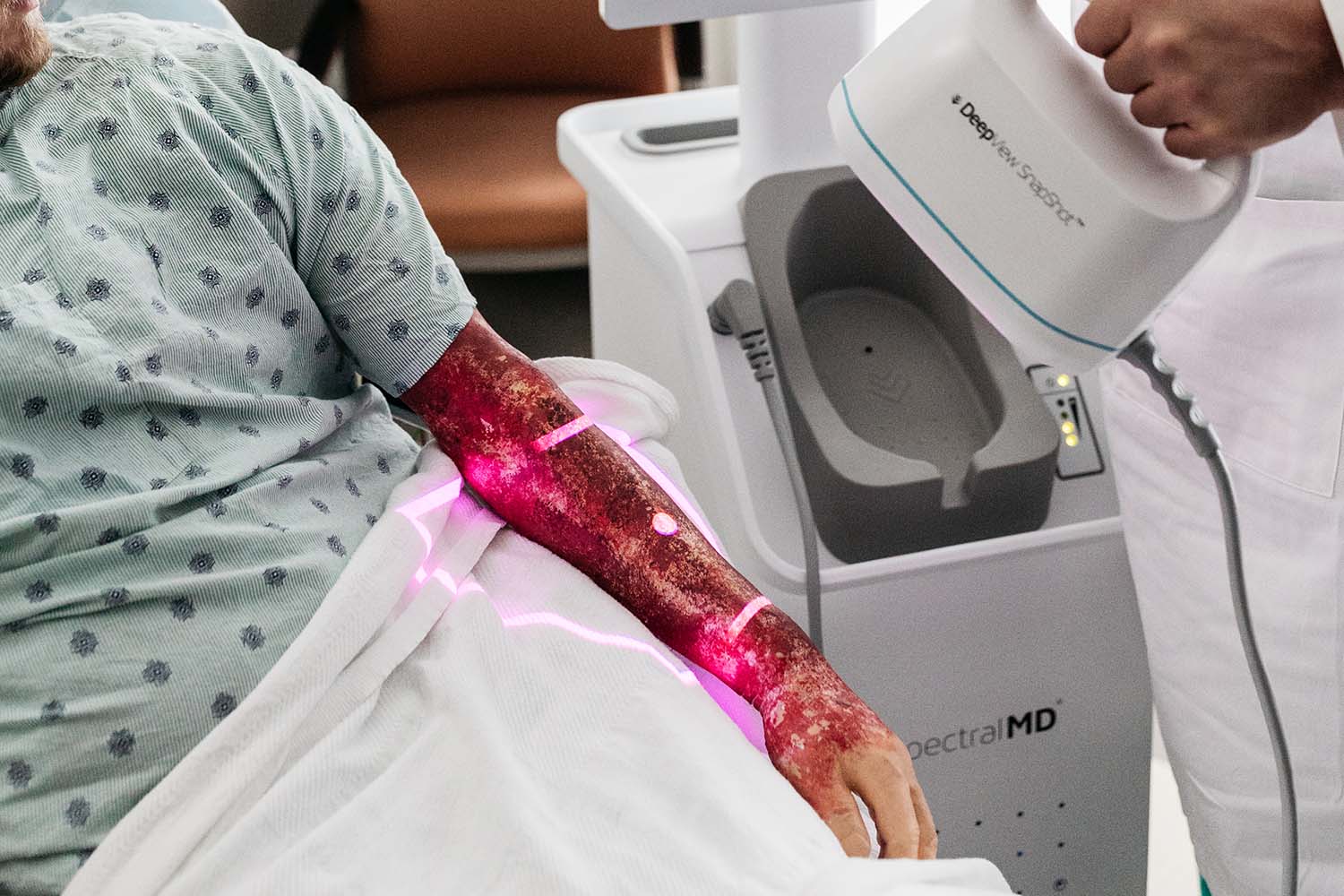
DeepView AI® System – Pioneering Objective Clinical Assist in Burn Care
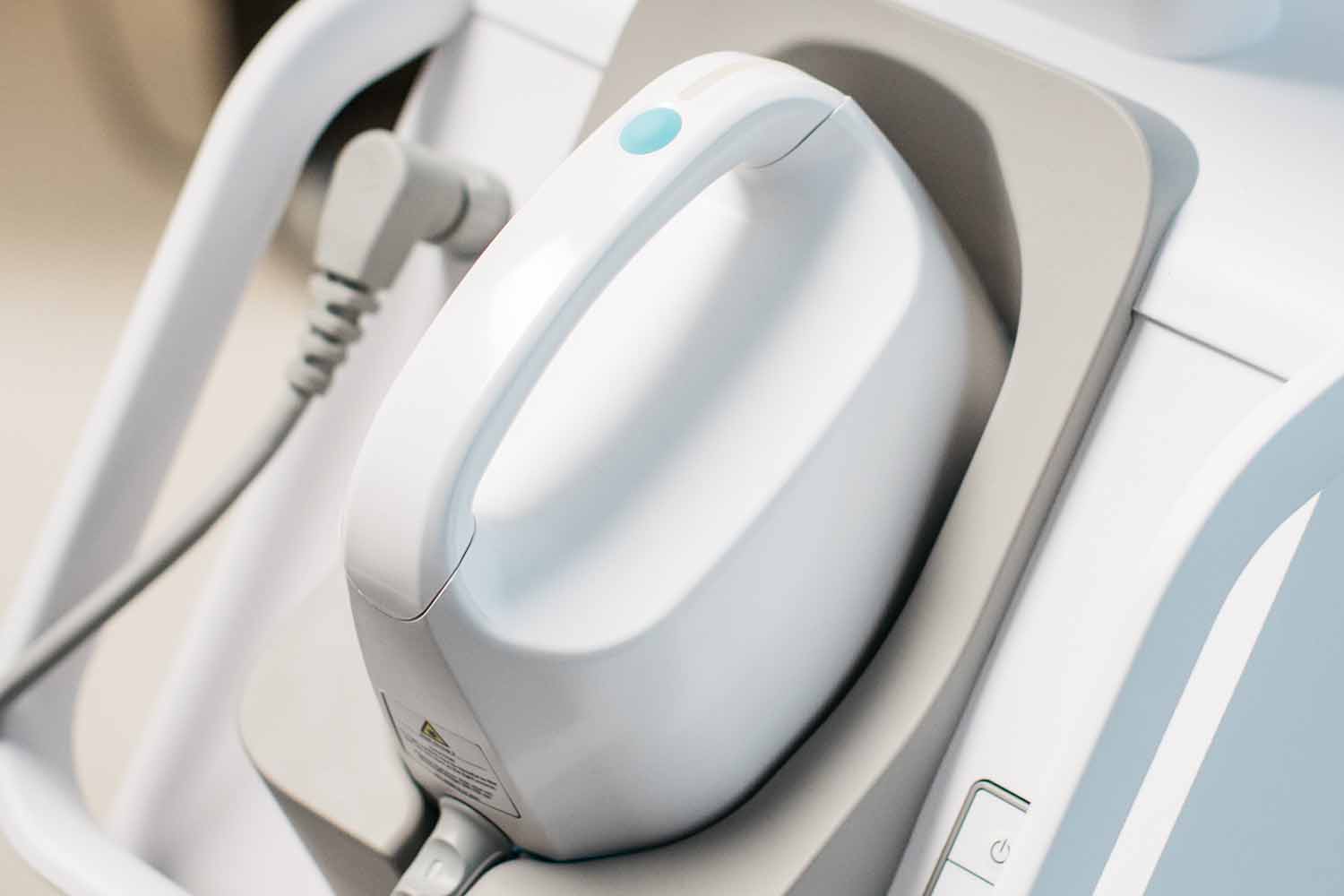
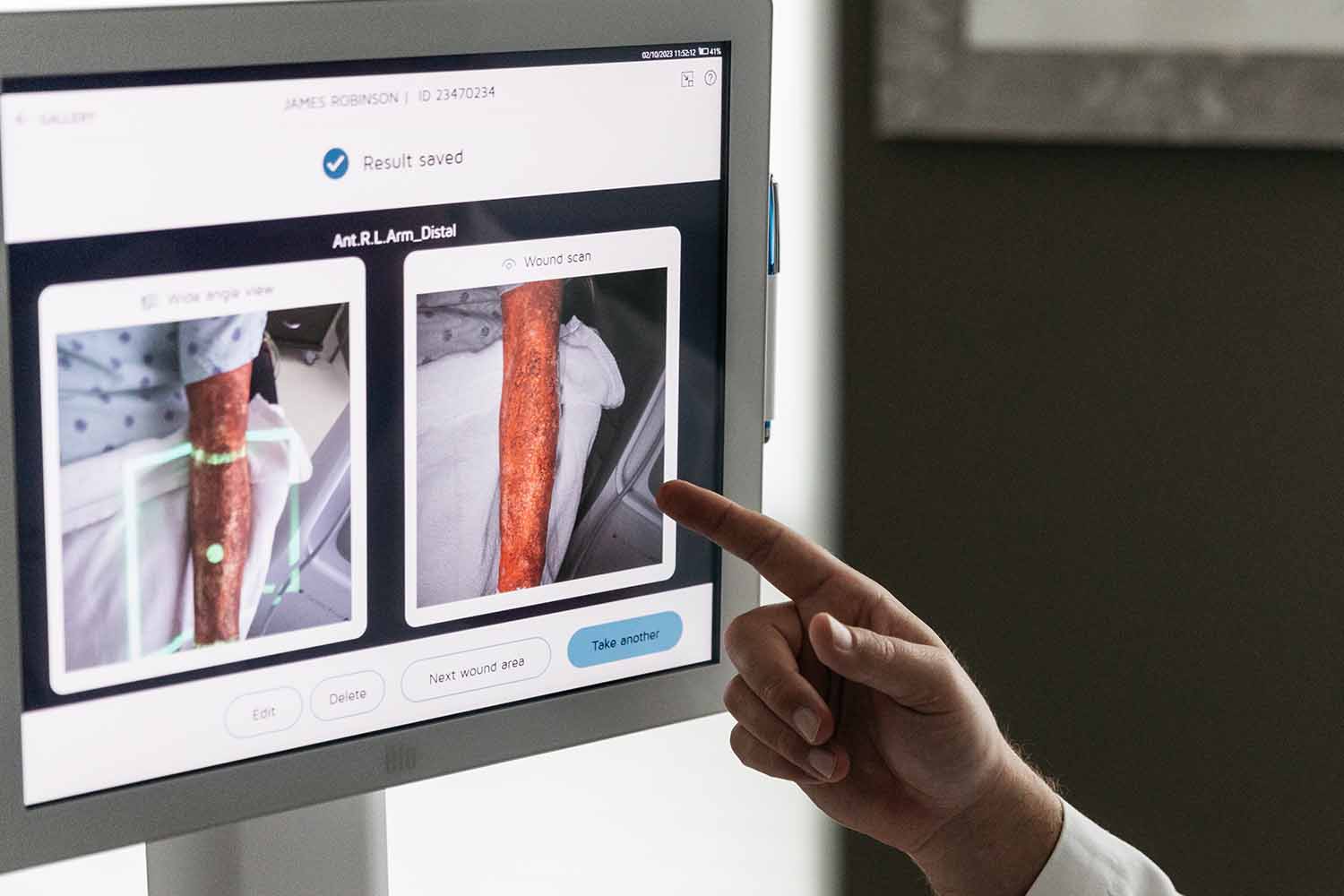
- Spectral AI’s DeepView AI ® system combines DeepView SnapShot® hardware (for real-time, non-invasive imaging) with DeepView AI® software (for predictive analysis).
- The system provides data-driven insights on tissue viability and expected healing trajectory—within minutes, not days.
- Supported by multiple clinical studies and FDA designations, DeepView® is pioneering objective, AI-powered diagnostics in burn care.
Looking Ahead — From Subjective to Quantitative Burn Care
- As imaging and AI technologies mature, burn assessment is shifting from subjective observation to measurable precision.
- Spectral AI is positioned at the forefront of this transformation, delivering objective diagnostics that improve outcomes, consistency, and confidence in burn care
Related Posts